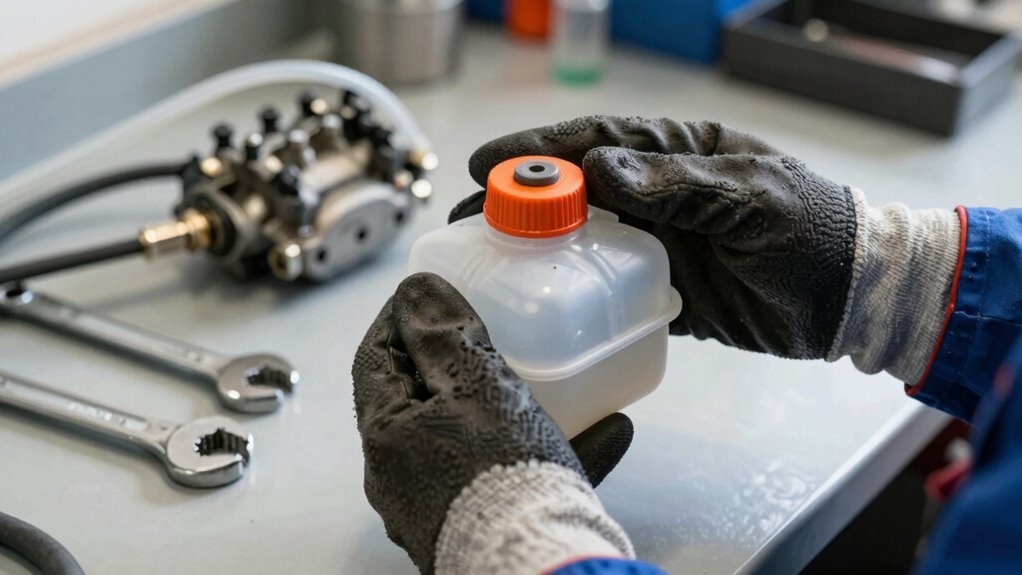

To quickly bleed your brakes, start by checking and topping off the hydraulic fluid with fresh, uncontaminated brake fluid. Begin bleeding with the caliper furthest from the master cylinder, typically the passenger rear, and work your way to the front. Attach a clear hose to the bleed screw and have a container handy. Open and close the screw properly while your helper presses the pedal slowly. Keep an eye on the fluid level and guarantee a bubble-free flow—if you want to master the details, keep going.
Get ready for Prime Big Deal Days — try Prime free
Exclusive member deals on October 6–7, plus fast free delivery. Cancel anytime.
As an affiliate, we earn on qualifying purchases.
Key Takeaways
- Ensure brake fluid reservoir is filled with the correct, fresh, and uncontaminated fluid before starting.
- Begin bleeding with the caliper furthest from the master cylinder, typically the passenger rear.
- Open the bleed screw, assist in pressing the brake pedal, then close the screw before release to remove air.
- Continuously monitor and top off the brake fluid reservoir to prevent air entry during bleeding.
- Check brake pedal firmness after each caliper bleed and repeat if the pedal remains soft or spongy.
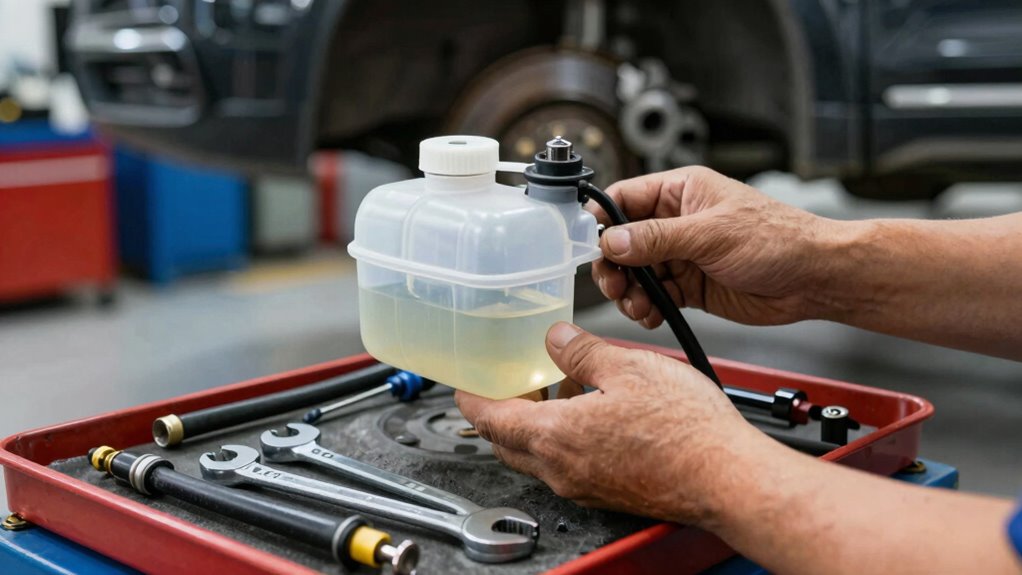
Bleed your brakes properly to guarantee your vehicle stops safely and reliably. This process removes air bubbles from the brake lines, ensuring firm pedal feel and peak braking performance. The first step involves inspecting your brake system, especially the hydraulic fluid level. Low hydraulic fluid can cause spongy brakes or a soft pedal, so make sure the fluid reservoir is filled to the recommended level with fresh brake fluid. Using the correct type of brake fluid for your vehicle is essential—most often DOT 3, DOT 4, or DOT 5.1. Keep in mind that brake fluid is hygroscopic, meaning it absorbs moisture over time, which can reduce braking efficiency and corrode internal components.
Next, focus on the brake calipers, which are indispensable for applying pressure to the brake pads and stopping your vehicle. When bleeding your brakes, start with the caliper furthest from the master cylinder, typically the passenger side rear, then move to the driver side rear, front passenger, and finally the front driver side. This sequence helps push air bubbles out of the entire system efficiently. Attach a clear hose to the bleed screw on the brake caliper and submerge the other end in a container with a small amount of brake fluid to prevent air from entering. Have a friend assist you by slowly pressing the brake pedal, then opening the bleed screw to release trapped air and hydraulic fluid. When you see air bubbles escape, close the screw before your helper releases the pedal. Repeat this process until you see a steady stream of hydraulic fluid without bubbles.
Throughout the bleeding process, keep an eye on the hydraulic fluid level in the reservoir. If it drops too low, top it off with fresh brake fluid to prevent introducing new air into the system. Always use clean, uncontaminated fluid during the process. Additionally, properly maintaining your brake fluid is crucial because it is hygroscopic and can absorb moisture, which can lead to internal corrosion and reduced braking efficiency. Regularly checking the brake fluid quality can help you spot contamination early and avoid costly repairs. It’s also important to understand that moisture absorption can occur even during normal use, so timely maintenance is key to preventing internal damage. Furthermore, using a diagnostic tool can help identify potential issues with your brake system before they become serious. After completing the bleeding on each caliper, check the brake pedal for firmness—if it feels soft or spongy, repeat the bleeding process. Properly bleeding your brakes isn’t just about safety; it’s about maintaining control and peace of mind on the road. Additionally, understanding the importance of hydroscopic brake fluid can help you better maintain your brake system and prevent internal corrosion. With these simple steps, you can keep your braking system in top shape and enjoy confident, reliable stopping power whenever you need it.
As an affiliate, we earn on qualifying purchases.
Frequently Asked Questions
Can I Bleed Brakes Without a Partner?
Yes, you can bleed brakes without a partner by using a brake bleeding kit or a one-man bleeding tool. This process helps prevent brake fluid contamination and guarantees your brake system remains in good condition. Just follow the instructions carefully, keep an eye on fluid levels, and use a clear tube to monitor air bubbles. Doing so maintains proper brake system maintenance and keeps your brakes responsive and safe.
What Tools Are Essential for Brake Bleeding?
For a successful bleeding procedure, you’ll need essential tools like a wrench to loosen fittings, a clear hose, and a container to catch old brake fluid. You’ll also need fresh brake fluid, a brake bleeder kit or a pump, and gloves for safety. These tools help you efficiently remove air bubbles and guarantee the brake fluid system is properly filled and sealed, making your brake bleeding safer and more effective.
How Often Should I Bleed My Brakes?
You should bleed your brakes every 2 to 3 years or if you notice spongy pedal feel or brake fluid contamination. Regular brake system maintenance prevents moisture buildup, which can cause brake fluid to deteriorate and reduce braking efficiency. Ignoring this can lead to costly repairs and unsafe driving conditions. Keep an eye on your brake fluid’s condition and schedule bleeding as part of your routine vehicle maintenance.
Is It Safe to Drive After Bleeding Brakes?
It’s generally safe to drive after bleeding your brakes once you’ve checked the brake system pressure and confirmed there’s no brake fluid contamination. Make certain the brake fluid level is correct and the pedal feels firm. If the brake system pressure is restored and the fluid is clean, you can drive confidently. However, if you notice any sponginess or decreased braking performance, recheck for issues before hitting the road.
Can Brake Bleeding Fix Spongy Brake Pedals?
Think of your brake system like a delicate dance—when contaminated brake fluid or air bubbles linger, the pedal feels spongy, like stepping into a marsh. Brake bleeding can fix this by removing air bubbles and flushing out contaminated fluid, restoring firm, responsive brakes. It’s a simple yet vital step to guarantee your brake pedal feels solid again, giving you confidence and control every time you press down.
As an affiliate, we earn on qualifying purchases.
Conclusion
Think of your brake system as a delicate garden, needing just the right touch to stay healthy. When you bleed the brakes, you’re watering and pruning to keep everything flowing smoothly. Skipping this step is like neglecting your plants—soon, they’ll wither. But with this quick checklist, you’re tending your garden with confidence, ensuring your brakes stay responsive and reliable. A well-maintained system is your vehicle’s blooming, safe journey—so keep tending it with care.
brake caliper bleed screw wrench
As an affiliate, we earn on qualifying purchases.
As an affiliate, we earn on qualifying purchases.
As an affiliate, we earn on qualifying purchases.
Fall Picks
fall essentials
As an affiliate, we earn on qualifying purchases.