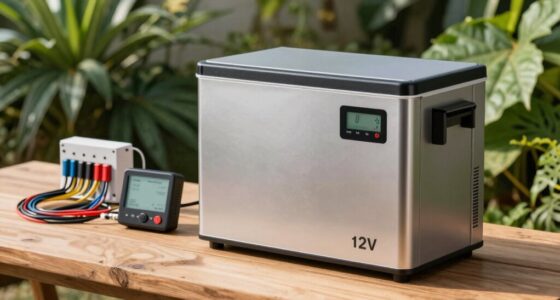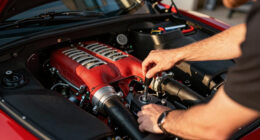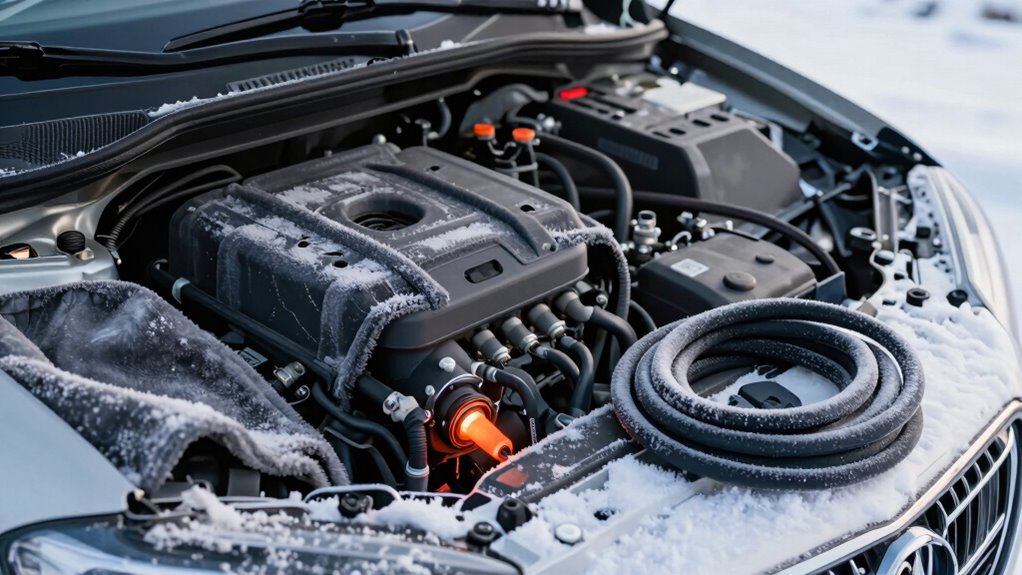
To guarantee a no-drama cold-weather start, start with a well-maintained battery that’s clean, fully charged, and suited for winter. Let your engine idle for a minute after startup to warm up fluids, and avoid revving immediately. Keep your fuel tank at least half full to prevent freezing, and park in a garage or use a block heater if possible. Taking these simple steps now can make winter starts smoother—there’s more tips to keep your vehicle reliable in cold conditions.
Key Takeaways
- Ensure the battery is fully charged, clean, and corrosion-free before cold weather starts.
- Use a block heater or park indoors to warm the engine and battery overnight.
- Allow the engine to idle for 30 seconds to 1 minute before driving.
- Keep the fuel tank at least half full to prevent freezing and condensation.
- Use winter-specific engine oil and consider high-performance batteries for extreme cold conditions.
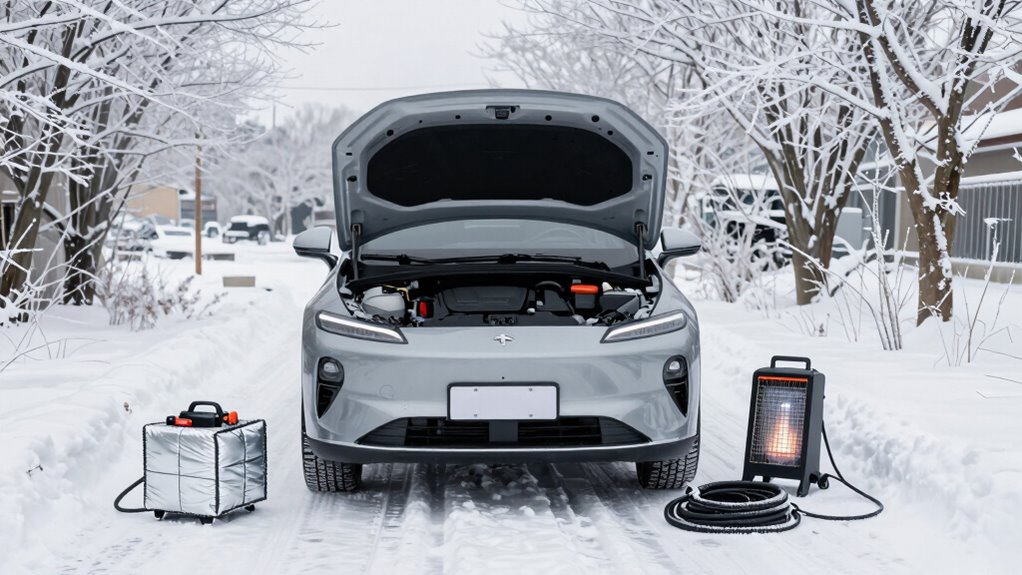
Ever wonder how to start your vehicle smoothly when the temperature drops? Cold weather can turn starting your car into a challenge, but with a few simple steps, you can keep things running without a hitch. The key lies in proper battery upkeep and understanding how to warm up your engine efficiently. Your car’s battery is especially vulnerable in chilly conditions, losing power more quickly when it’s cold. To prevent surprises, check your battery’s health before winter hits. Look for corrosion on the terminals, ensure the connections are tight, and consider having it tested if it’s more than a few years old. A well-maintained battery will give you a stronger spark, making cold starts easier. If your battery is weak, swapping it out before the cold sets in can save you frustration and costly repairs later.
Once your battery is in good shape, focus on allowing your engine to warm up properly. Unlike in warmer months, you shouldn’t just turn the key and go; giving your engine a moment to warm up reduces stress on the components and improves overall starting performance. When you turn on your vehicle, let it idle for about 30 seconds to a minute. This short warm-up period gets the oil circulating and the engine temperature rising, which helps it run more smoothly once you start driving. Avoid revving the engine immediately after starting—this can cause unnecessary wear when the oil is still cold and thick. Instead, gently accelerate after the engine reaches its normal operating temperature, which usually takes a few minutes. Additionally, a fully charged battery can significantly improve cold-weather starts, so keeping it charged is essential. Regularly checking your battery’s state of charge can help you identify potential issues before they leave you stranded. Proper battery maintenance also includes keeping the terminals clean and free of corrosion, which ensures reliable starting in cold weather. It’s also helpful to consider the importance of winter-specific engine oil, as it can enhance lubrication during cold starts. Furthermore, using polarized or high-performance batteries designed for extreme conditions can provide added reliability in harsh winter climates.
Incorporating proper battery upkeep and allowing your engine to warm up are simple yet effective ways to ensure no-drama cold-weather starts. It’s also wise to keep your fuel tank at least half full; a fuller tank prevents moisture buildup and keeps your fuel lines from freezing. Additionally, using a block heater or parking in a garage can make a significant difference. These measures keep your engine and battery warmer overnight, easing the initial start in the morning. Remember, cold weather isn’t just uncomfortable — it can be tough on your vehicle’s systems. By staying proactive with maintenance and giving your engine the attention it needs, you’ll avoid the stress of being stranded or dealing with a dead battery on a chilly day. With these simple tips, your vehicle will start reliably, no drama required.
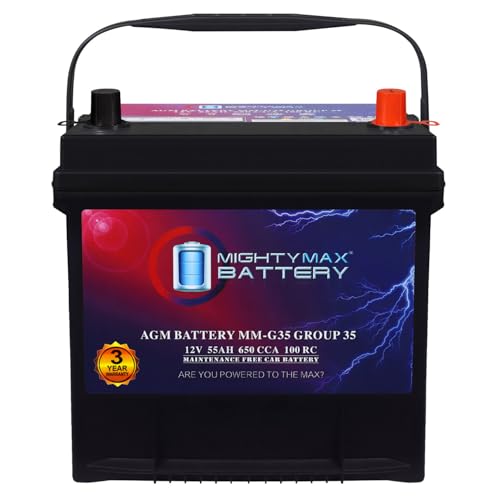
Mighty Max Battery MM-G35 Start and Stop Car BCI Group Size 35 12V 55Ah, 100RC, 650 CCA Rechargeable AGM Car battery
Fast Starting Power: This 12V 55Ah 650 CCA delivers strong, steady starts is ready for any weather in…
As an affiliate, we earn on qualifying purchases.
As an affiliate, we earn on qualifying purchases.
Frequently Asked Questions
What Type of Battery Is Best for Cold-Weather Starts?
For cold-weather starts, you should choose a AGM (Absorbent Glass Mat) battery. They offer better cold weather performance because they resist freezing better and provide reliable power when temperatures drop. Plus, AGM batteries generally have a longer lifespan, making them a smart investment for winter driving. Their enhanced performance guarantees your vehicle starts smoothly without drama, even in harsh, cold conditions.
How Often Should I Perform Maintenance on My Vehicle in Winter?
You should check your vehicle’s maintenance weekly during winter—yes, weekly! Cold weather is relentless, so keep a close eye on tire pressure and antifreeze levels like your car’s life depends on it. These small checks prevent big problems, like freezing engines or blowouts. Don’t ignore the tiny details; they’re your best defense against winter’s worst surprises. Stay vigilant, and your car will thank you with smooth starts all season.
Are There Specific Engine Oils Better Suited for Cold Temperatures?
In cold temperatures, you should choose engine oils with lower viscosity ratings, like 0W-20 or 5W-30. Synthetic oils are better suited because they flow more easily in the cold, guaranteeing quick lubrication and easier starts. These oils maintain their viscosity in low temps, reducing engine strain and improving performance. Always check your vehicle’s manual for recommended viscosity ratings to confirm you pick the right oil for winter conditions.
What Are Signs My Car Is Having Trouble Starting in Cold Weather?
Like an old-time telegraph operator, you notice your car struggles to start in cold weather. Signs include slow engine turnover, dimming headlights, or the engine stalling shortly after ignition. Regular battery maintenance helps prevent these issues, as a weak battery hampers cold starts. Additionally, poor fuel efficiency and rough idling are clues your car’s having trouble. Address these signs early to keep your vehicle running smoothly during winter’s chill.
Can Using a Block Heater Improve Cold-Weather Starting Performance?
Yes, using a block heater can markedly improve cold-weather starting. It warms the engine block, making it easier for your engine to start without straining the battery or spark plugs. Plus, a preheated engine boosts fuel efficiency because it reduces the need for excessive fuel to start the engine. This simple step helps your vehicle run more smoothly, conserve energy, and extend engine life during cold months.

Magnetic Engine Block Heater 1155 1155X 1153, 200 Watt 120 Volt 60 HZ Replacement for Tractors, Trucks, Cars GELUOXI
▼【Reference Part Number】: Engine Block Heater 1153, 1155, 1155X. (120 Volts; 60 HZ; 200 Watts)
As an affiliate, we earn on qualifying purchases.
As an affiliate, we earn on qualifying purchases.
Conclusion
By following these no-drama cold-weather starting tips, you’ll breeze through winter mornings without the frustration of being stranded. Remember, even in the age of dial-up internet, patience and preparation were key—just like now, when a little foresight makes all the difference. Keep your battery charged, your fluids topped, and your mindset zen. With these simple steps, you’ll be ready for anything, proving that, just like in the 90s, a calm approach always wins the day.

STP Premium Synthetic Blend 4 Cycle Small Engine Oil, SAE 10w30 Motor Oil for Lawnmowers, Generators, Tractors, Snow Blowers, and More, 32 fl oz
SAE 10W-30 MOTOR OIL FOR SMALL ENGINES: One 32 fl oz bottle of STP Premium Synthetic Blend 4…
As an affiliate, we earn on qualifying purchases.
As an affiliate, we earn on qualifying purchases.

OPTIMA Batteries High Performance 34/78 RedTop Sealed AGM Car, Truck, and SUV Starting Battery, 800 CCA, Dual SAE and GM Terminals, Maintenance Free, Versitile Mounting
BATTERY SPECS: 12-Volt, 800 Cold Cranking Amps, Size: 10.06" Long x 6.94" Wide x 7.88" Tall, Weight: 38.8…
As an affiliate, we earn on qualifying purchases.
As an affiliate, we earn on qualifying purchases.