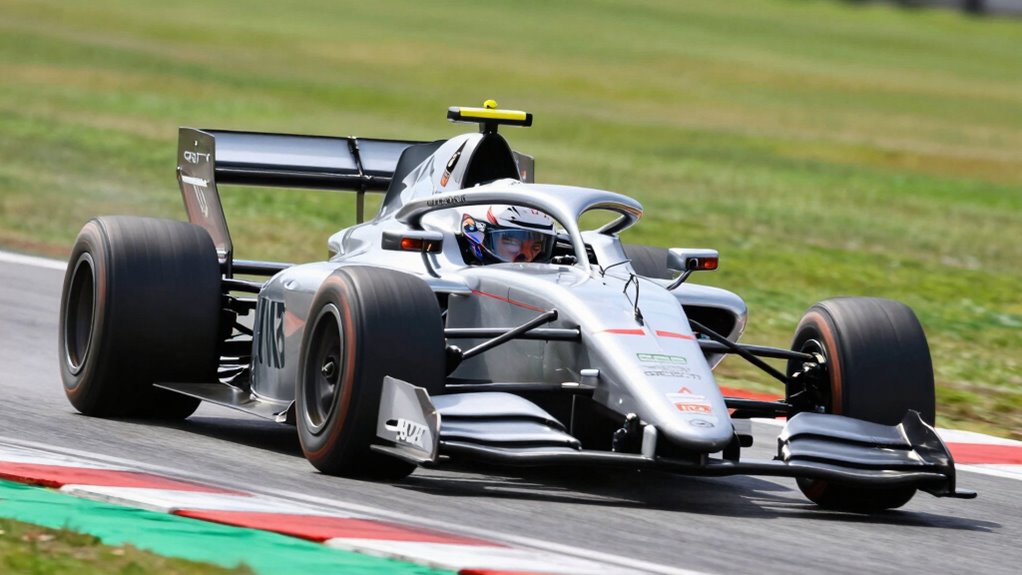

To maintain sharp mental focus on the track, you need to stay fully engaged with your driving environment. Use visualization to plan your line and control routines like breathing exercises to stay calm. Constantly scan ahead, check your mirrors, and keep your attention anchored on your tasks. Developing mental resilience helps you recover from mistakes quickly. Keep practicing these techniques to enhance your concentration and reaction time—if you continue exploring, you’ll discover even more ways to stay focused under pressure.

Get business pricing on garage and car supplies
- Business-only prices and quantity discounts
- Tax-exempt purchasing
- Multiple users, one account, clear invoices
Key Takeaways
- Practice visualization of racing lines and maneuvers to enhance mental preparedness before driving.
- Utilize deep breathing and mindfulness exercises to maintain calmness and focus under high-speed conditions.
- Develop systematic checklists to stay organized and prevent distractions during track sessions.
- Cultivate mental resilience to recover quickly from mistakes and sustain concentration throughout the drive.
- Incorporate body awareness and mental routines to build instinctive reactions and improve overall focus.

Have you ever wondered what separates a good driver from a great one on the track? It’s not just raw talent or speed—it’s the mental discipline that keeps you sharp and in control. Central to this is your ability to maintain impeccable car control and employ effective focus techniques. When you’re pushing your limits at high speeds, your mind must stay laser-focused on the task at hand, ignoring distractions and managing every nuance of the car’s behavior. This mental clarity allows you to react instinctively, making split-second adjustments that can mean the difference between a smooth lap and a costly mistake.
Car control is the foundation of confident driving on the track. It’s about understanding your vehicle’s dynamics—how it responds to throttle, steering, and braking inputs—and being able to manipulate these inputs precisely. When you have good car control, you’re aware of your car’s grip levels, weight transfer, and traction, which helps you keep the car stable through corners and under acceleration. But maintaining this level of control requires focus techniques that train your mind to stay present and attentive. Techniques like visualization, where you mentally picture your line and maneuvers before hitting the track, help prepare your mind for the demands ahead. Deep breathing exercises can also calm any pre-race nerves, ensuring your focus remains razor-sharp. Developing a mental routine can enhance your consistency and reaction time during high-pressure situations. Incorporating mental resilience into your training can further improve your ability to recover from mistakes quickly and stay composed under pressure. Additionally, understanding how recovery techniques influence mental focus can help you bounce back more effectively from errors, maintaining your competitive edge.
As you accelerate through a corner, your focus techniques come into play. You should be constantly scanning your environment—watching your line, checking the apex, and monitoring your speed—without getting overwhelmed. Developing a mental routine, such as a check-list approach, helps you stay systematic instead of reactive. This routine might include cues like “smooth inputs,” “look ahead,” and “trust your training.” These cues keep your mind anchored to positive habits, preventing distractions from creeping in. It’s also vital to learn how to recover quickly from mistakes by staying composed, which is a mental skill that improves with experience and deliberate practice. Incorporating mindfulness practices can also sharpen your focus and help you stay calm under pressure, further elevating your driving performance. Moreover, practicing body awareness can assist in maintaining optimal physical readiness, which directly impacts mental clarity and reaction times during high-stakes laps.
Ultimately, mastering car control combined with sharp focus techniques gives you the edge on the track. It’s about creating a mental environment where your attention is fully engaged, your reactions are instinctive, and your confidence is unshakable. With disciplined mental focus, you’ll find yourself driving not just faster, but smarter and safer. This mental resilience is what transforms a decent driver into a true track specialist, allowing you to push your limits while maintaining control and consistency lap after lap.
track driving focus training aid
As an affiliate, we earn on qualifying purchases.
As an affiliate, we earn on qualifying purchases.
Frequently Asked Questions
How Does Mental Focus Impact Lap Times?
Your mental focus directly impacts lap times by helping you stay alert and precise. When you’re focused, you better manage driver fatigue and maintain consistent control, reducing mistakes. Track familiarity also boosts your concentration, allowing you to anticipate turns and optimize your line. If your focus wanes, fatigue sets in and mistakes increase, slowing you down. Staying mentally sharp keeps your lap times faster and more consistent.
What Mental Exercises Improve Track Driving Concentration?
You can improve your track driving concentration through mental exercises that boost mental resilience and cognitive training. Practice visualization techniques to prepare for each lap, focusing on your ideal racing line and braking points. Engage in mindfulness meditation to stay present and reduce distractions. Also, do quick decision-making drills to sharpen your focus under pressure. These exercises enhance your mental clarity, helping you stay concentrated during high-speed runs.
Can Meditation Enhance Driving Performance?
Meditation acts like a steady lighthouse guiding your focus through turbulent waters. By practicing mindfulness training and breath control, you sharpen your mental clarity and stay present on the track. Regular meditation enhances your concentration, reduces anxiety, and improves reaction times. When you harness these techniques, your driving performance becomes smoother and more controlled, turning mental calm into your greatest racing advantage. So, yes, meditation can truly elevate your driving skills.
How Do Adrenaline and Nerves Affect Focus?
Adrenaline effects can boost your alertness and reaction time, helping you respond quickly on the track. However, nerves might cause you to become overly tense or distracted, impairing focus. Managing nerves is key—deep breaths, visualization, and staying present help regulate adrenaline effects. When you control your nerves, you maintain sharp focus and harness adrenaline’s benefits without letting anxiety cloud your judgment.
What Role Does Visualization Play in Mental Preparation?
Think of visualization as your mental Holodeck, where you rehearse every turn and lap. You use visualization techniques and mental rehearsal to simulate race scenarios, building confidence and reducing surprises. By vividly imagining your lines, braking points, and reactions, you prepare your mind for real track conditions. This mental practice sharpens your focus, enhances muscle memory, and helps you stay calm and composed under pressure.
As an affiliate, we earn on qualifying purchases.
Conclusion
So, next time you’re on the track, remember: keeping your mental focus is just as vital as not crashing into the wall. Stay sharp, resist the urge to daydream about your weekend plans, and embrace those moments of intense concentration. After all, if you can’t stay focused behind the wheel, maybe you should stick to watching racing from your couch—where the biggest danger is spilling snacks. Happy driving, and try not to laugh at the speed demons!
As an affiliate, we earn on qualifying purchases.
racing driver mental resilience book
As an affiliate, we earn on qualifying purchases.
As an affiliate, we earn on qualifying purchases.
Halloween Picks
halloween
As an affiliate, we earn on qualifying purchases.