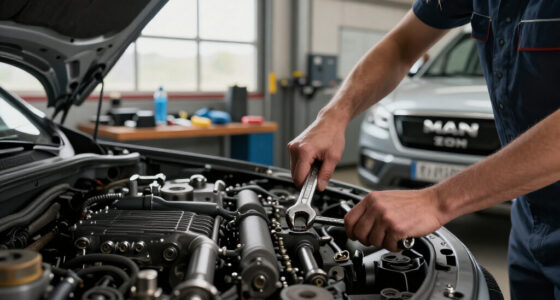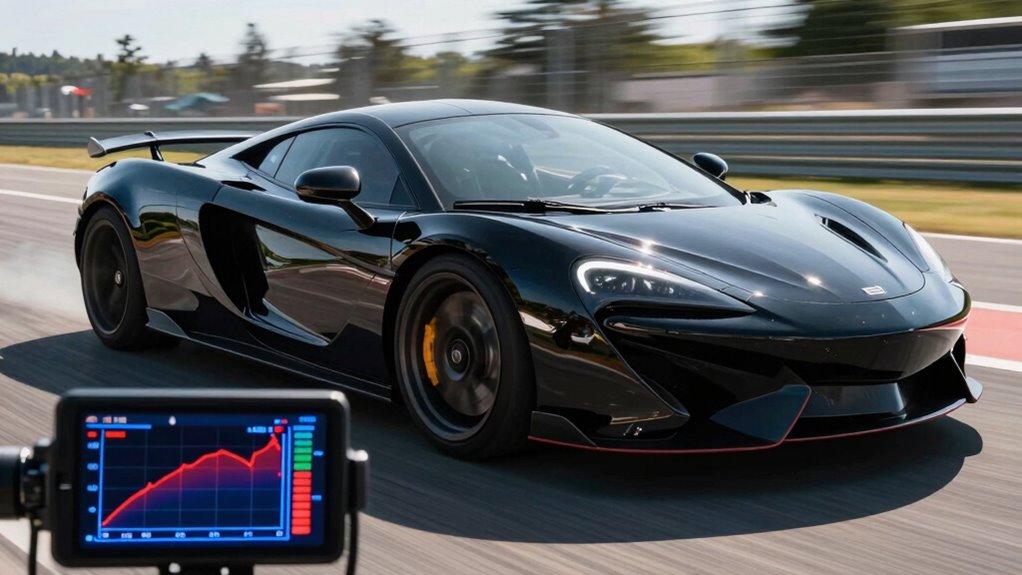
When comparing torque and horsepower in sports cars, torque gives you that quick, explosive feeling during takeoff and low-speed acceleration, while horsepower determines your top speed and keeps you going strong at higher RPMs. A car with high torque responds swiftly and feels lively, while high horsepower means better sustained acceleration and faster top speeds. If you want to understand how these factors combine for a thrilling ride, keep exploring further.

Get business pricing on garage and car supplies
- Business-only prices and quantity discounts
- Tax-exempt purchasing
- Multiple users, one account, clear invoices
Key Takeaways
- Torque provides immediate, strong acceleration at low speeds, essential for quick launches and city driving.
- Horsepower determines the vehicle’s top speed and sustained high-performance capabilities.
- High torque enhances responsiveness and low-end power, while high horsepower supports higher RPM performance.
- Balancing torque and horsepower results in an optimal driving experience, combining quick response and high-speed stability.
- Understanding both metrics helps consumers choose sports cars suited to their driving priorities and performance needs.
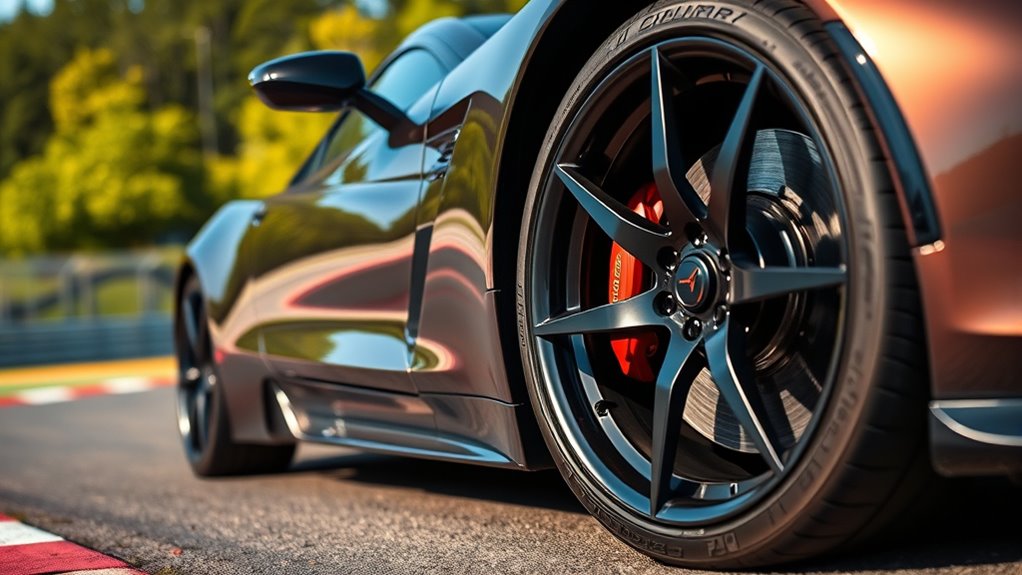
Understanding the difference between torque and horsepower is essential when evaluating an engine’s performance. Both are critical measures, but they influence your driving experience in different ways. When it comes to sports cars, knowing how these two factors affect engine performance and acceleration dynamics can help you choose the right vehicle for your driving style. Torque refers to the twisting force the engine produces, which is what moves the car initially and during low-speed acceleration. Horsepower, on the other hand, measures the engine’s overall power output and how quickly it can do work over time. While torque gives you that immediate, strong pull off the line, horsepower determines how fast your car can ultimately go and sustain high speeds.
Torque delivers quick initial acceleration; horsepower governs top speed and sustained performance.
If you’re looking for a sports car that delivers rapid acceleration from a standstill, you’ll want to pay close attention to torque figures. High torque allows for quicker initial acceleration because it provides the force needed to overcome inertia and get the vehicle moving swiftly. This is why many sports cars with high torque ratings feel explosive when you hit the gas pedal; they can launch forward with a burst of power. Conversely, horsepower plays a bigger role in top-end speed and sustained acceleration. It’s what keeps your car pulling strongly as you reach higher speeds, enabling you to maintain momentum and achieve impressive quarter-mile times. In essence, torque is about the immediate response and low-end power, while horsepower is about sustained performance and high-speed capabilities.
In terms of engine performance, understanding the interplay between torque and horsepower helps you grasp how a vehicle will handle different driving situations. For example, a car with high torque at low RPMs will feel lively and responsive in city driving or during spirited highway overtakes. Meanwhile, a car with high horsepower at higher RPMs will excel in reaching higher speeds and maintaining them, making it ideal for racing or long-distance cruising. This balance influences acceleration dynamics considerably; a sports car that optimizes both torque and horsepower will offer a thrilling driving experience, combining quick, aggressive launches with smooth, high-speed cruising. Additionally, advancements in engine technology continue to enhance how torque and horsepower are balanced for optimal performance. Recognizing the importance of engine efficiency can also help in understanding how these metrics impact fuel consumption and emissions, which are increasingly vital considerations for consumers.
Ultimately, when evaluating a sports car, consider both torque and horsepower not as isolated figures but as parts of a bigger picture. A well-designed engine leverages both to give you the kind of performance that excites and satisfies your driving needs. Whether you prioritize quick acceleration or top-end speed, understanding how these two metrics work together will help you make smarter choices and better appreciate the engineering behind your favorite sports cars. Additionally, performance metrics help consumers understand how different engine characteristics translate to real-world driving.
Frequently Asked Questions
How Does Torque Affect Acceleration in Sports Cars?
Torque directly impacts your sports car’s acceleration, giving you that quick burst of power when you press the pedal. Higher torque means faster acceleration because your engine can produce more rotational force. This also affects engine braking, making deceleration smoother during downshifts. While strong torque enhances acceleration, it can sometimes reduce fuel efficiency. You’ll notice your car responds swiftly, especially at lower RPMs, giving you an exhilarating driving experience.
Which Is More Important for Top Speed: Torque or Horsepower?
You’ll find horsepower more vital for top speed, as it measures an engine’s potential to push a sports car forward quickly. A well-designed engine maximizes horsepower, enabling faster runs, though it might impact fuel efficiency. Torque provides the initial shove, but for reaching those blazing top speeds, horsepower’s the star. Focus on engine design that balances both, ensuring your ride delivers thrilling speed without unnecessary fuel costs.
How Does Engine Size Influence Torque and Horsepower?
Your engine size, or engine displacement, directly impacts torque and horsepower; larger engines typically produce more of both. Turbocharging technology enhances this effect by forcing more air into the engine, increasing power output without increasing size. So, a bigger engine with turbocharging delivers higher torque and horsepower, boosting your car’s performance and top speed. This combination is especially beneficial for sports cars seeking impressive acceleration and speed.
Can Vehicles Have High Torque but Low Horsepower?
You can definitely find vehicles with high torque but relatively low horsepower—think of them as the reliable workhorses of the road. These engines often prioritize engine longevity and fuel efficiency over outright speed, making them ideal for towing or hauling. While they excel at low-end power, they might not deliver the top-end speed you crave. This balance helps keep the engine running smoothly longer and saves fuel in daily driving.
How Do Modifications Impact Torque and Horsepower?
Modifications like turbo upgrades and exhaust systems markedly impact your car’s torque and horsepower. Turbo upgrades boost airflow, increasing both torque and horsepower by forcing more air into the engine. Upgrading exhaust systems reduces backpressure, helping exhaust gases escape faster and improving overall power output. Together, these modifications can enhance your vehicle’s performance, giving you quicker acceleration and higher top speeds. Just remember, tuning may be needed to maximize these gains effectively.
Conclusion
Understanding torque versus horsepower helps you choose the right sports car. Did you know that the Bugatti Chiron produces 1,479 horsepower but also boasts 1,180 lb-ft of torque? This combination delivers incredible speed and acceleration. Remember, torque gives you that quick, powerful twist off the line, while horsepower keeps you soaring at high speeds. So, whether you crave rapid acceleration or top-end speed, knowing the balance between torque and horsepower guides you to the perfect performance machine.
Fall Picks
fall essentials
As an affiliate, we earn on qualifying purchases.