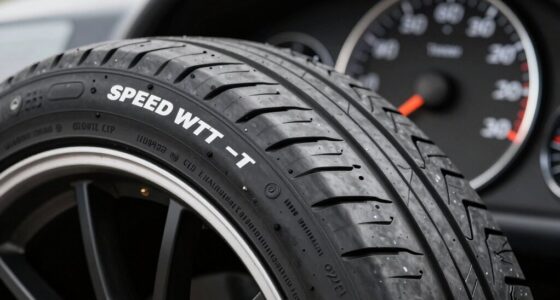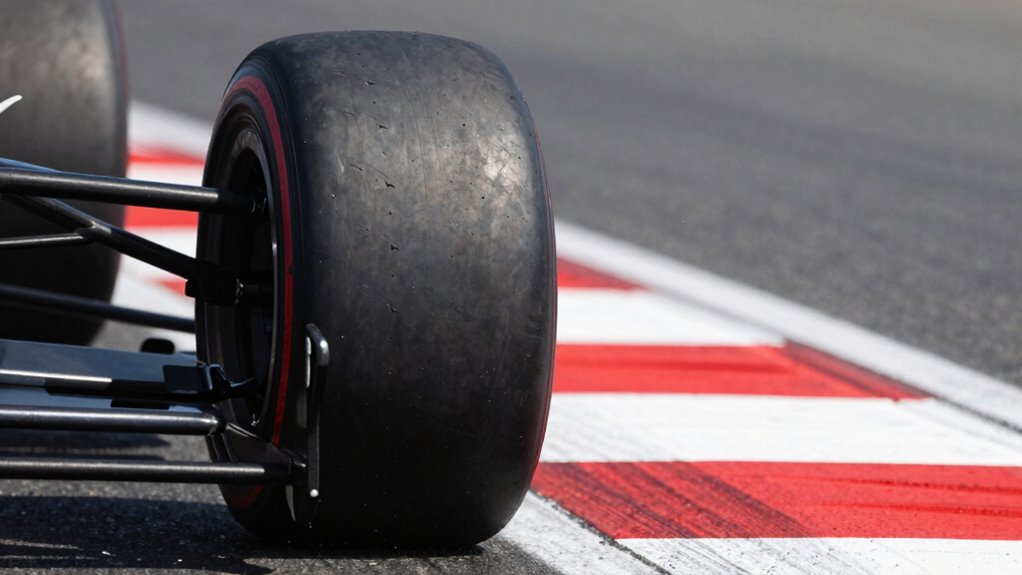

Your tire compound directly impacts your high-speed driving safety and performance. The right mix of materials helps manage heat build-up, ensuring better grip and reducing risks like blowouts or loss of control. Softer compounds offer more traction but wear faster, while harder ones improve stability. Choosing the correct compound based on conditions and maintaining it properly can make all the difference—stay tuned to discover more about optimizing your tire performance.

Get garage and car supplies delivered free — and shop member deals
- Fast, free delivery on millions of items
- Access to Prime Big Deal Days deals on October 6–7
- Prime Video, Amazon Music and more included
Key Takeaways
- Tire compounds influence heat resistance and dissipation, preventing overheating during high-speed driving.
- Proper compound selection balances grip and durability essential for maintaining safety at high speeds.
- Heat-resistant additives in compounds reduce the risk of tire failure from excessive heat buildup.
- Different compounds optimize traction on various surfaces, improving handling and stability at high velocities.
- Advanced compounds with high thermal conductivity facilitate better heat transfer, extending tire lifespan under thermal stress.
The Composition of Tire Rubber and Its Impact on Grip
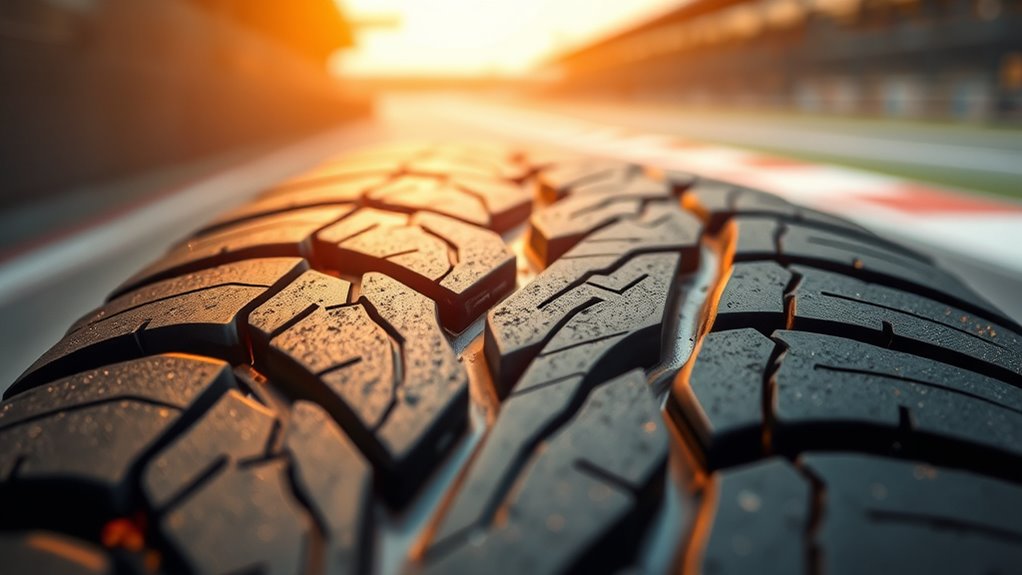
The composition of tire rubber directly influences how well your tires grip the road, especially at high speeds. The rubber’s formulation affects traction, durability, and heat resistance, all essential for safety and performance. Tire tread patterns play a critical role by providing the right channels for water dispersion and grip on different surfaces. Equally important is the tire sidewall design, which impacts flexibility and stability during sharp turns or high-speed maneuvers. A well-designed sidewall allows the tire to absorb shocks and maintain contact with the road, enhancing overall grip. Additionally, European cloud innovation supports the development of advanced tire materials and manufacturing processes that improve performance at high speeds. When selecting tires for high-speed driving, pay close attention to both the rubber compound and these design features, as they work together to optimize traction and safety at elevated speeds. Moreover, advancements in tire compound technology have led to formulations that better withstand heat buildup during high-speed driving, further improving safety and longevity.
How Temperature Affects Tire Performance at High Speeds

When you drive at high speeds, friction generates heat that can quickly raise your tires’ temperature. If they reach the most favorable range, your tires perform better, providing more grip and stability. Proper tire compound selection can enhance heat resistance and overall performance, especially during spirited driving. In addition, selecting the right tire materials helps optimize heat dissipation, reducing the risk of overheating. For example, using transforms stale bread techniques in tire manufacturing can improve durability and flexibility under extreme conditions. Moreover, understanding digital literacy can help drivers access real-time data on tire conditions via apps and sensors, further preventing overheating incidents. However, pushing beyond that can cause overheating, increasing the risk of failures or blowouts. Maintaining optimal temperature levels is essential for consistent performance and safety.
Heat Generation During Friction
As your tires spin at high speeds, friction between the tire surface and the road generates significant heat, causing the temperature of the tire to rise rapidly. This heat impacts tire performance by accelerating tire wear and reducing road grip. Elevated temperatures can soften the rubber, leading to faster degradation and compromised handling. Proper heat dissipation techniques and navigation and mapping of tire heat distribution can help identify potential hotspots that threaten safety. Consider these points: – Excess heat accelerates tire wear, shortening lifespan – Overheating decreases grip, risking loss of control – High temperatures may cause tire delamination or blowouts – Heat buildup affects the tire’s elasticity and response – Maintaining proper heat levels guarantees consistent performance. Understanding how friction-generated heat influences your tires helps you optimize safety and performance during high-speed driving, especially when selecting compounds designed to withstand these thermal stresses. Additionally, modern tire compounds are engineered with heat resistance in mind to improve durability under extreme conditions.
Optimal Operating Temperatures
Friction-generated heat can quickly push tire temperatures beyond ideal ranges during high-speed driving, making it essential to understand how peak temperatures influence performance. When your tires reach their perfect operating temperature, the tire tread becomes more pliable, enhancing grip and handling. Too cold, and the tread remains stiff, reducing traction; too hot, and the tire risks losing structural integrity. Maintaining proper temperatures also preserves sidewall flexibility, which absorbs shocks and supports stability. If temperatures are too low, sidewalls become rigid, impairing responsiveness. Conversely, excessive heat causes sidewalls to soften excessively, compromising cornering precision. Knowing your tire’s ideal temperature range ensures you maximize grip and safety, especially during high-speed maneuvers where every degree counts. Proper temperature management is key to optimal tire performance. Additionally, understanding the key traits of tire materials can help in selecting compounds optimized for high-speed conditions, ensuring durability and safety. Being aware of compound properties such as heat resistance and elasticity can further improve your ability to select tires suited for high-performance driving. Recognizing how temperature impacts tire compound behavior allows drivers to make more informed choices for safety and performance.
Overheating Risks and Failures
Exceeding the ideal temperature range during high-speed driving can cause serious tire failures. Overheating weakens tire structure, reducing tire longevity and risking blowouts. Elevated temperatures compromise chemical stability, causing rubber compounds to break down faster. This accelerates wear and diminishes performance. Be aware that:
- Excess heat can cause tread separation
- Chemical degradation leads to unpredictable handling
- Overheating increases the risk of sidewall failure
- Prolonged high temperatures shorten tire lifespan
- Maintaining paramount temperatures preserves compound integrity
- Using heat-resistant tire compounds can significantly reduce the risk of overheating-related failures.
- Proper cooling methods and regular temperature monitoring are essential to prevent dangerous overheating.
- Understanding the impact of temperature on tire materials helps in selecting appropriate compounds for high-speed conditions.
- Implementing thermal management techniques can further optimize tire performance and safety.
The Relationship Between Tire Compound and Heat Dissipation

Your tire’s material composition directly influences how well it dissipates heat during high-speed driving. The efficiency of heat transfer depends on the specific compounds used, affecting tire performance and safety. Understanding this relationship helps you choose the right tire for ideal heat management at speed. For instance, different tire compounds are engineered to optimize heat dissipation, ensuring better performance and longevity under demanding conditions. Additionally, the composition of the rubber plays a crucial role in managing thermal properties and preventing overheating during intense driving sessions. The chemical makeup of the tire influences its ability to withstand high temperatures and maintain grip. Moreover, advancements in compound technology have led to formulations that better balance grip and heat resistance, enhancing overall safety. Recent innovations also focus on thermal management techniques, which improve heat transfer efficiency and extend tire lifespan during high-performance driving.
Material Composition Effects
The material composition of a tire considerably influences how effectively it dissipates heat during high-speed driving. Your tire’s manufacturing process and the way compound layering is designed directly impact heat management. Different materials, like silica or carbon black, affect heat build-up and dissipation rates. Properly engineered compounds balance grip and heat flow, preventing overheating. Consider these factors:
- The choice of raw materials in tire manufacturing
- The layering structure of compounds for ideal heat transfer
- The use of heat-resistant additives
- The influence of tread pattern on heat dispersion
- The balance between durability and heat dissipation
These elements work together to ensure your tires handle high speeds without excessive heat accumulation, maintaining safety and performance. Additionally, tire design principles play a crucial role in optimizing heat dissipation and overall tire performance. Understanding the material layering process can further enhance your knowledge of how heat is managed within tire structures.
Heat Transfer Efficiency
Material composition directly influences how effectively a tire transfers heat away from its surface. High thermal conductivity in tire compounds allows heat to dissipate more efficiently, preventing excessive buildup during high-speed driving. Conversely, compounds with poor thermal conductivity retain heat longer, which can lead to overheating and reduced performance. Proper formulation of tire compounds involves balancing thermal properties to optimize both heat retention and dissipation. Balancing heat retention and dissipation is vital; a tire that retains too much heat can degrade faster, while one that transfers heat too quickly might not maintain peak grip. By choosing a compound with the right thermal conductivity, you guarantee better heat transfer efficiency, helping your tires stay cooler under stress. thermal conductivity in tire compounds plays a crucial role in managing heat buildup. This not only enhances safety but also extends tire lifespan and maintains consistent high-speed handling.
Choosing the Right Tire Compound for Different High-Speed Conditions
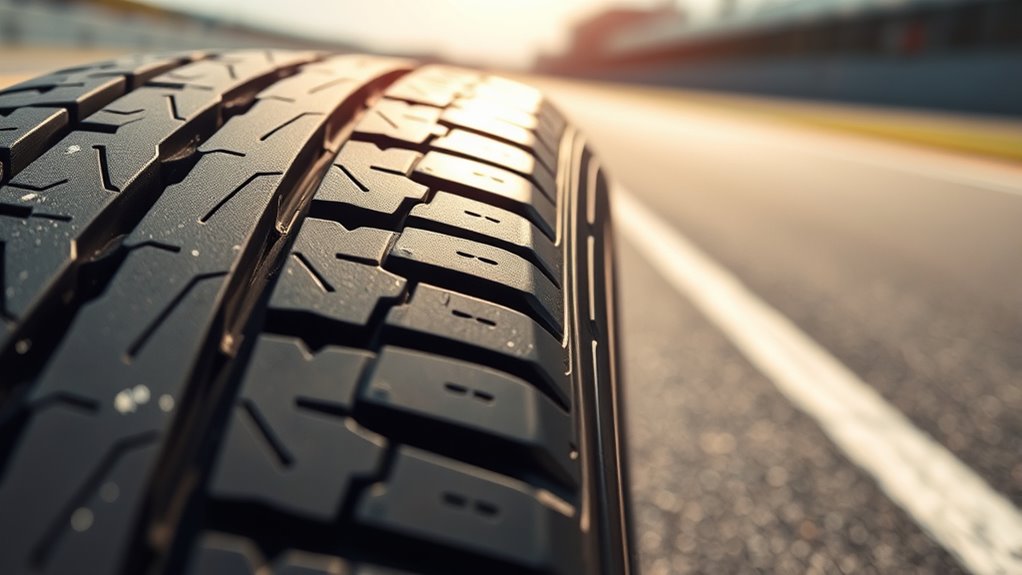
Choosing the right tire compound for different high-speed conditions is crucial to maximize performance and safety. Your choice impacts grip, durability, and handling. Consider how tire tread patterns influence water evacuation and grip, especially on wet tracks. Tread wear patterns reveal how tires respond under stress, guiding you to select compounds suited for consistent performance. For high-speed racing on smooth surfaces, softer compounds provide better grip, but wear faster. On rougher tracks, harder compounds last longer but may compromise traction. Key considerations include:
Choosing the right tire compound balances grip, durability, and safety for high-speed racing conditions.
- Tire tread patterns optimized for specific conditions
- Tread wear patterns indicating tire health
- Balancing grip and durability
- Matching compound hardness with track surface
- Monitoring tread wear for safety and performance
Selecting the right compound ensures your tires perform effectively, handling high speeds safely and efficiently.
The Role of Compound Hardness in Handling and Safety
Since compound hardness directly influences how a tire responds under high-speed conditions, understanding its role is vital for ideal handling and safety. Harder compounds generally offer improved handling stability because they resist deformation at high speeds, maintaining better contact with the road. This stability helps you navigate corners more confidently and reduces the risk of sudden loss of control. However, excessively hard compounds can reduce grip, especially in wet conditions, compromising safety. Softer compounds provide more traction but may wear quickly and offer less handling stability at high speeds. Striking the right balance in compound hardness ensures your tires respond predictably, providing excellent handling and safety during high-speed driving. Choosing the appropriate hardness level is essential for maximizing performance while minimizing risks.
Maintenance and Monitoring of Tire Compound for Peak Performance
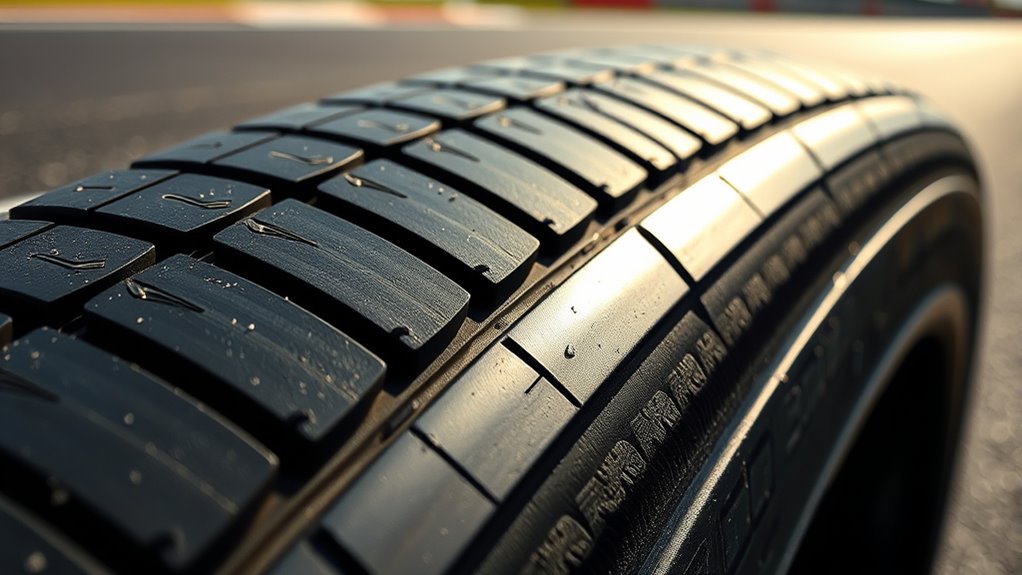
To guarantee your tire compounds perform at their best over time, regular maintenance and monitoring are key. Check your tire pressure frequently, ensuring it stays within the manufacturer’s recommended range; improper pressure affects grip and heat buildup. Watch for uneven tread wear, which signals misalignment or suspension issues that can compromise high-speed stability. Rotate your tires regularly to promote even wear and extend their lifespan. Keep an eye on tread depth, replacing tires before they become too worn for safe performance. Additionally, inspect for cuts, punctures, or sidewall damage that could weaken the tire’s integrity.
Regularly check tire pressure, monitor tread wear, rotate tires, and inspect for damage to ensure optimal performance and safety.
- Maintain proper tire pressure consistently
- Monitor tread wear levels regularly
- Rotate tires according to schedule
- Look for signs of damage or irregularities
- Replace tires before performance declines
Frequently Asked Questions
How Does Tire Compound Influence Fuel Efficiency at High Speeds?
Your tire compound directly impacts fuel efficiency at high speeds by affecting tire grip and rolling resistance. A softer compound offers better grip but increases rolling resistance, leading to higher fuel consumption. Conversely, a harder compound reduces rolling resistance, improving fuel economy but potentially sacrificing grip. You should choose a tire compound that balances grip and resistance, optimizing fuel efficiency without compromising safety during high-speed driving.
Can Changing Tire Compounds Improve Lap Times in Racing?
Changing tire compounds can definitely improve your lap times by enhancing tire grip, which allows better cornering and acceleration. While some worry about compound durability, modern materials balance durability with performance, so you won’t sacrifice longevity for speed. By selecting the right compound, you optimize grip and handling, giving you that competitive edge on the track. Don’t overlook this upgrade—it’s a proven way to shave seconds off your lap times.
Do Different Weather Conditions Require Different Tire Compounds?
Yes, different weather conditions require different tire compounds. You need weather adaptation to optimize grip and safety, so switching to compounds suited for wet, dry, or cold conditions is essential. Compound versatility allows your tires to perform well across varying environments, giving you better handling and confidence. By choosing the right compounds for each situation, you can improve your driving performance and reduce the risk of accidents on unpredictable roads.
How Does Tire Compound Selection Affect Tire Longevity?
Think of your tires as the shoes you wear daily; the wrong choice wears out faster. Your tire compound selection directly impacts tire wear and longevity. Softer compounds, while offering better grip, tend to wear out quicker, whereas harder compounds last longer but sacrifice some performance. Choosing the right compound balances durability and performance, ensuring your tires last longer without sacrificing safety and handling.
Are There Safety Risks Associated With Using the Wrong Tire Compound?
Using the wrong tire material can pose safety risks, especially at high speeds. Poorly suited compounds may reduce grip, increase the chance of blowouts, or cause uneven wear. Always consider safety considerations when choosing a tire, ensuring it matches your driving conditions. You want a compound that offers ideal heat resistance, traction, and durability to keep you safe and maintain control during high-speed driving.
Conclusion
Choosing the right tire compound is like selecting the perfect dance partner—you need harmony for ideal performance. When you understand how compounds react to heat, speed, and handling, you reveal safer, more confident driving at high speeds. Regular maintenance keeps your tires in top shape, like a well-tuned instrument. Stay attentive to your tires, and you’ll enjoy smoother, more controlled rides—like a skillful dancer gliding effortlessly across the floor.
Halloween Picks
halloween
As an affiliate, we earn on qualifying purchases.