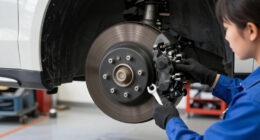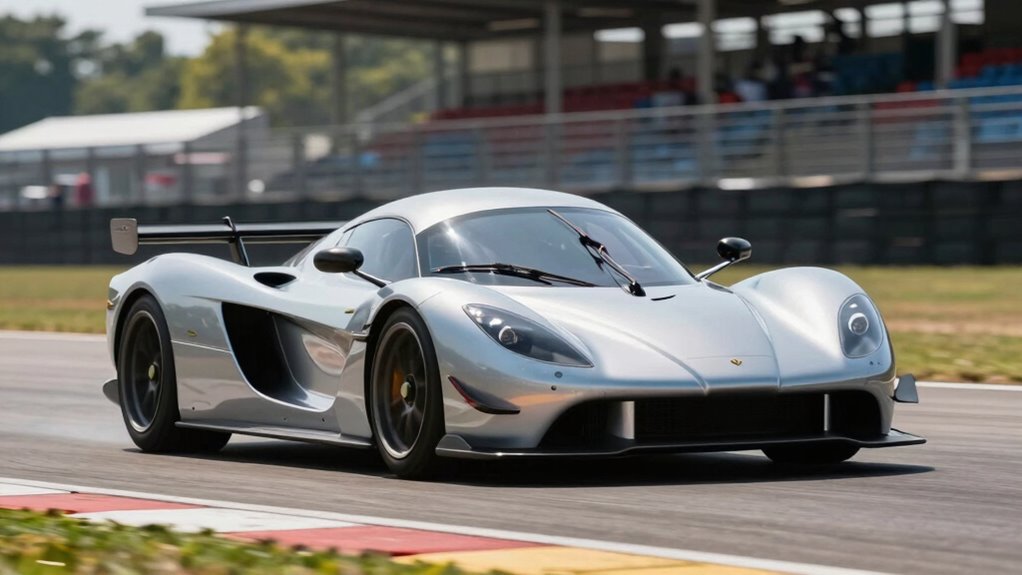
Aerodynamics directly impacts your vehicle’s top speed by reducing air resistance and drag, allowing it to move faster with less effort. Streamlined shapes, smooth surfaces, and aerodynamic accessories help airflow smoothly over and around the car, decreasing turbulence and improving stability. Advanced testing like wind tunnels and CFD simulations optimize these designs for maximum performance. Continuing further reveals how innovative aerodynamic techniques can push speed limits even higher while maintaining safety and efficiency.
Listen free for 30 days with Audible
Thousands of audiobooks and originals — cancel anytime.
As an affiliate, we earn on qualifying purchases.
Key Takeaways
- Aerodynamics reduces air resistance, allowing vehicles to accelerate faster and achieve higher top speeds.
- Streamlined shapes minimize drag, enabling better airflow and less energy loss at high velocities.
- Surface smoothness and finishes decrease turbulence, boosting efficiency and maximum speed potential.
- Aerodynamic components like spoilers and diffusers improve stability, indirectly supporting higher top speeds.
- Optimized airflow management reduces drag and lift, enhancing vehicle performance and maximum speed capabilities.

COGEEK Universal Mini Spoiler Wing Carbon Fiber Texture Car Tail Wing
- Material: High-strength ABS with carbon fiber texture
- Durability: Scratch-resistant, fade-resistant, anti-aging
- Compatibility: Fits sedans, SUVs, hatchbacks, coupes
As an affiliate, we earn on qualifying purchases.
As an affiliate, we earn on qualifying purchases.
The Basics of Aerodynamics and Vehicle Speed

Have you ever wondered why some vehicles can go faster than others? It all comes down to aerodynamic principles and vehicle design. Aerodynamics involves understanding how air flows around a vehicle, reducing drag and improving speed. When designing a vehicle, engineers focus on shaping it to minimize air resistance, such as sleek, smooth surfaces and streamlined contours. Good vehicle design incorporates these aerodynamic principles, making a car cut through the air more efficiently. This focus on energy-efficient design helps improve overall vehicle performance and sustainability. In addition, optimizing aerodynamics can lead to better handling and increased safety at high speeds. The use of advanced materials in vehicle construction further enhances aerodynamics by reducing weight and improving airflow. These materials also contribute to structural integrity, ensuring safety without compromising aerodynamic efficiency. Additionally, computational modeling allows engineers to simulate airflow patterns and refine designs before manufacturing. This not only helps achieve higher top speeds but also enhances fuel efficiency and stability at high speeds. By optimizing aerodynamics, manufacturers create vehicles that perform better, allowing you to enjoy faster, more efficient rides. Understanding these basics gives you insight into why some vehicles outperform others on the road.

Qiilu 2 pcs Universal Aluminium Alloy Rear Bumper Race Air Diversion Diffuser Panel Car Styling
- Material: Aluminium alloy with black anodized finish
- Performance: Reduces drag and increases speed
- Design: Racing-style rear bumper diffuser kit
As an affiliate, we earn on qualifying purchases.
As an affiliate, we earn on qualifying purchases.
How Air Resistance Affects High-Speed Vehicles

As vehicles accelerate to higher speeds, air resistance—or drag—becomes a major obstacle that limits their performance. Wind tunnel testing helps engineers analyze and reduce this drag by simulating real-world conditions, allowing precise adjustments to shape and airflow. You’ll notice that tire aerodynamics also play a vital role; smooth, carefully designed tires minimize turbulence and reduce rolling resistance, which adds to overall drag. When you optimize both the vehicle’s body shape and tire design, you lower air resistance considerably, enabling higher top speeds. Ignoring these factors means your vehicle faces increased drag that hampers acceleration and top-end performance. By understanding and addressing air resistance through wind tunnel testing and tire aerodynamics, you can achieve better efficiency and reach your vehicle’s maximum potential. Understanding aerodynamics is essential for designing vehicles that perform efficiently at high speeds. Additionally, aerodynamic optimization techniques can significantly enhance vehicle stability and safety at high velocities, especially when considering drag reduction methods, which involve Wind tunnel testing and other precise adjustments to improve overall performance. Incorporating aerodynamic principles early in the design process can lead to more effective and sustainable high-speed vehicle development.

Meguiar's G191700 Smooth Surface Clay Kit, Safe and Easy Car Claying for Smooth as Glass Finish
- Quick Surface Contaminant Removal: Removes overspray, fallout, sap, tar
- Achieve Glass-Like Smooth Finish: Use with microfiber towel for gloss
- Enhanced Wax Protection: Easier application and longer-lasting
As an affiliate, we earn on qualifying purchases.
As an affiliate, we earn on qualifying purchases.
The Role of Streamlined Shapes in Reducing Drag
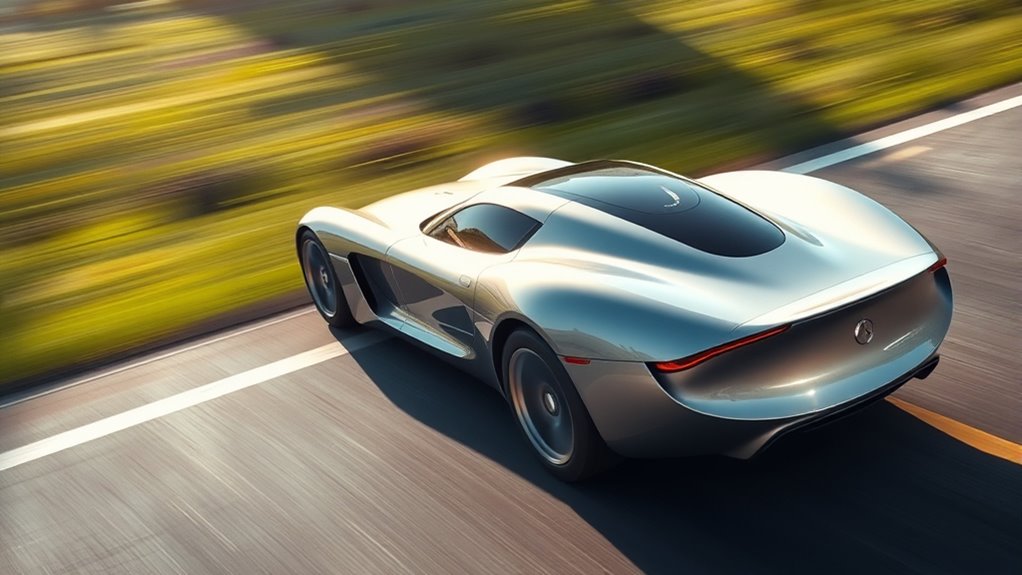
Streamlined shapes are vital for reducing drag and improving a vehicle’s top speed. When you design with streamlined shapes, you minimize air resistance by allowing air to flow smoothly over the surface. These shapes help to reduce drag by decreasing turbulence and separation of airflow, which substantially impacts overall performance. The curved, tapered forms direct airflow efficiently, cutting down on the drag force that opposes motion. By focusing on aerodynamic contours, you guarantee that the vehicle encounters less resistance at high speeds. This drag reduction means you can achieve higher top speeds with less energy exerted. Fundamentally, streamlined shapes optimize airflow, making top-speed performance more efficient and effective. Additionally, understanding how aerodynamic principles influence design choices is crucial for maximizing speed capabilities. Recognizing how airflow management affects drag reduction allows engineers to refine vehicle designs further, leading to improved high-speed performance. Incorporating streamlined design techniques can also help in achieving these aerodynamic benefits more consistently, especially when considering design optimization for specific speed goals.

Evargc Black & Red Universal 69" – 73" Adjustable Car Front Bumper Lip Splitter Chin Spoiler Body Kit with 86.6" Side Skirt Extension Rocker Panel and Rear Bumper Lip Diffuser Compatible Most Vehicle
- Compatible Bumper Width: Fits 69-73 inch bumpers
- Installation Precautions: Measure bumper and fenders before installing
- Material Quality: Made of durable ABS plastic
As an affiliate, we earn on qualifying purchases.
As an affiliate, we earn on qualifying purchases.
Impact of Surface Texture and Materials on Airflow

Your vehicle’s surface texture and materials play a critical role in airflow efficiency. Rough surfaces increase drag, while smoother textures help reduce turbulence, and material density can influence weight and stability. Using texture enhancement techniques, you can enhance top speed by fine-tuning these surface characteristics for ideal aerodynamic performance. Additionally, understanding local culture and traditions can inspire design choices that improve overall vehicle performance and appeal. Considering manufacturing processes can also help optimize surface finishes for better aerodynamic qualities and durability, and incorporating advanced surface treatments can further reduce drag and improve longevity. Being aware of surface finishing techniques allows for more precise control over these factors, leading to improved vehicle efficiency and speed, while integrating environmentally friendly materials promotes sustainable manufacturing practices that can positively impact performance and vehicle lifespan.
Surface Roughness Effects
Surface roughness plays a crucial role in determining an object’s aerodynamic efficiency, as even slight variations in texture can substantially alter airflow patterns. When the surface is rough, increased surface friction creates turbulence that slows airflow, reducing top speed. To minimize this, you should focus on material polishing, smoothing out irregularities that cause drag. A well-polished surface lowers surface friction, allowing air to glide more smoothly over the object. This reduction in turbulence helps maintain laminar flow, which is essential for reaching higher speeds. Small improvements in surface finish can have a significant impact on overall aerodynamic performance. By controlling surface roughness through careful polishing and selecting materials with naturally smooth textures, you optimize airflow and maximize top speed potential. Additionally, understanding how air quality influences the environment around aerodynamic testing can help improve measurement accuracy and performance assessments. Recognizing the impact of surface texture on airflow helps engineers develop better aerodynamic designs for enhanced speed and efficiency, especially when considering material selection to reduce drag. Furthermore, advancements in surface treatment technologies can provide more durable and smoother finishes that sustain aerodynamic benefits over time.
Material Density Impact
How does material density influence airflow and, consequently, top speed? Material properties, especially density variations, play a key role in aerodynamics. Denser materials tend to add weight, which can reduce acceleration and top speed, but they may also improve structural stability. Conversely, lighter materials decrease overall mass, allowing for faster speeds, but might affect durability. Surface density impacts how air flows over a vehicle’s exterior; higher density surfaces can create more drag if not engineered carefully. Variations in material density can alter the way airflow behaves around surfaces, influencing boundary layer development and airflow separation points. By selecting appropriate materials with optimized density properties, you can improve aerodynamic efficiency and maximize top speed while maintaining structural integrity. Additionally, understanding the impact of material density on airflow can guide better design choices for enhanced performance, especially when considering aerodynamic surface properties. Incorporating lightweight, high-strength materials can further enhance vehicle performance by reducing drag and improving fuel efficiency.
Texture Optimization Techniques
Optimizing surface textures can considerably enhance airflow around a vehicle, directly impacting its top speed. By carefully selecting surface coatings and textures, you reduce drag and improve aerodynamic efficiency. Smooth paint coatings create a sleek, frictionless surface, while specialized textures can channel airflow more effectively. Consider the following surface textures:
| Smooth Coating | Textured Surface | Ribbed Design |
|---|---|---|
| Reduces drag | Disrupts airflow | Guides air smoothly |
| Reflects airflow | Breaks turbulence | Minimizes wake |
| Enhances shine | Adds grip | Stabilizes airflow |
Choosing the right surface coating, whether glossy or matte, influences airflow dynamics. Texture optimization ensures your vehicle slices through air with minimal resistance, maximizing top speed potential. Additionally, understanding pinball machine weights is crucial when considering modifications that might impact overall aerodynamics or weight distribution. Proper surface texture design can also help in reducing turbulence, which is essential for achieving high speeds efficiently, and employing advanced surface materials can further enhance aerodynamic performance.
The Significance of Aerodynamic Components and Accessories

Aerodynamic components and accessories play a vital role in maximizing your vehicle’s top speed. They help reduce drag, increase downforce, and improve overall efficiency. Understanding these elements allows you to optimize your vehicle’s performance on the road or track.
Drag Reduction Techniques
Reducing drag is essential for achieving higher top speeds, and aerodynamic components and accessories play a critical role in this effort. One key area is cabin aerodynamics, where smooth shapes and vent placements minimize airflow disruptions, decreasing overall drag. Additionally, attention to tire drag is important; selecting low rolling resistance tires and maintaining proper inflation reduce the turbulence between tires and the road surface. Streamlined mirrors, door handles, and window designs further cut down airflow resistance around the vehicle. Using underbody panels helps smooth airflow underneath, preventing turbulent wake regions. These enhancements work together to lower drag coefficients, allowing your vehicle to cut through the air more efficiently. By focusing on cabin aerodynamics and tire drag, you can markedly improve top speed and fuel efficiency.
Downforce Enhancements
Have you ever wondered how race cars stick to the track at high speeds? Downforce enhancements play a pivotal role in that. By optimizing airfoil efficiency, you increase the ability of aerodynamic components to generate downward pressure without creating excessive drag. This improves grip and stability during high-speed turns. Vortex control is essential here; carefully designed spoilers and diffusers manipulate airflow to reduce turbulent vortices that can disrupt downforce. When vortex control is effective, it maintains smooth airflow over the car’s surfaces, maximizing downforce while minimizing drag penalties. These enhancements allow you to push your vehicle harder through corners, boosting overall top speed and safety. Properly implemented, downforce components are essential for achieving superior aerodynamic performance and maintaining control at extreme speeds.
Streamlined Design Benefits
Streamlined design plays a crucial role in enhancing your vehicle’s overall performance by minimizing air resistance. When you focus on aerodynamic efficiency, you reduce drag, allowing your vehicle to reach higher top speeds more easily. An optimized shape not only improves speed but also boosts fuel efficiency and stability at high velocities. Additionally, streamlined design enhances your vehicle’s design aesthetics, giving it a sleek, modern look that appeals to enthusiasts. Components like smooth body panels, tapered front ends, and integrated spoilers work together to create a cohesive, functional form. These aerodynamic accessories aren’t just for looks; they actively contribute to better airflow, less turbulence, and improved handling. Ultimately, a well-designed, streamlined vehicle maximizes performance while offering a visually appealing, aerodynamic presence.
Computational Fluid Dynamics and Wind Tunnel Testing
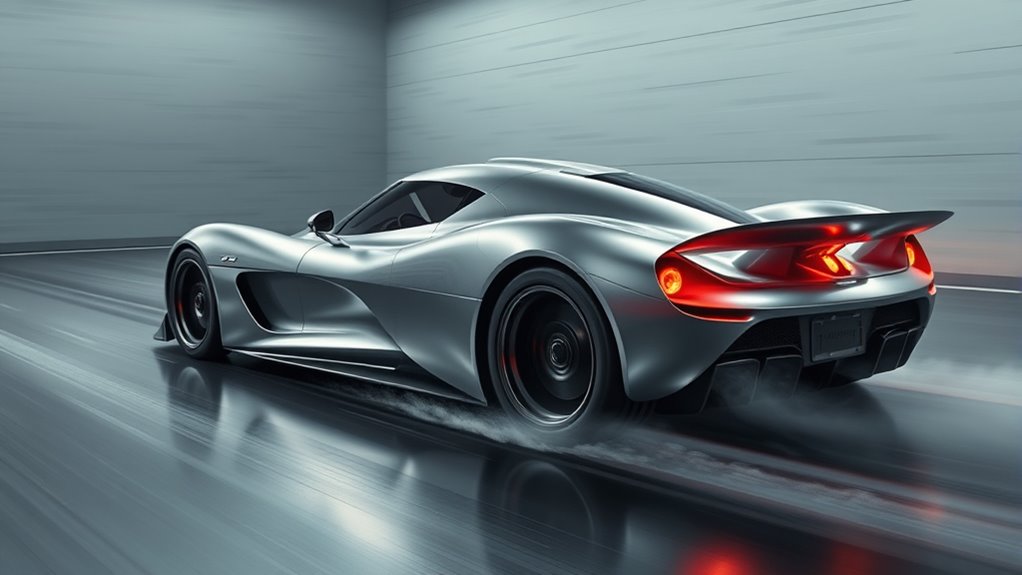
Computational Fluid Dynamics (CFD) and wind tunnel testing are essential tools for analyzing an object’s aerodynamic performance. Wind tunnel testing allows you to observe how air flows around a model in controlled conditions, providing real-time data on drag and lift. CFD complements this by simulating airflow digitally, enabling detailed analysis of complex designs without physical models. With CFD, you can identify problem areas, test modifications, and optimize shapes efficiently. Wind tunnel testing offers validation for these simulations, ensuring accuracy in real-world conditions. Together, these methods give you a thorough understanding of aerodynamic behavior, helping you refine designs for maximum top speed. Using CFD and wind tunnel testing, you’re equipped to make precise adjustments that notably enhance performance.
Real-World Examples of Aerodynamic Optimization

Real-world examples of aerodynamic optimization demonstrate how engineers apply principles to achieve higher speeds and better efficiency. For instance, race cars often feature sleek, streamlined designs that minimize aerodynamic illusions—visual tricks that reduce drag and turbulence at high speeds. These illusions help the vehicle cut through the air more smoothly, directly boosting top speed. Additionally, understanding atmospheric effects, like air density and wind patterns, allows engineers to tailor designs for specific environments, optimizing performance. In aviation, aircraft wings are shaped to counteract atmospheric effects such as turbulence and variable air pressure, ensuring stability and speed. These real-world applications show how precise manipulation of aerodynamics, combined with an awareness of atmospheric effects, leads to significant gains in speed and efficiency.
Balancing Aerodynamics With Vehicle Performance and Stability

While optimizing aerodynamics can considerably boost a vehicle’s top speed, it often introduces challenges to performance and stability. You need to find a balance between reducing drag and maintaining essential functions like vehicle interior comfort and engine cooling. Excessive focus on sleek design might hinder airflow necessary for cooling systems, risking engine overheating. Additionally, aggressive aerodynamics can decrease stability at high speeds, affecting handling. To address this, consider the following:
| Aerodynamic Focus | Impact on Performance & Stability |
|---|---|
| Reduced Drag | May compromise vehicle interior airflow |
| Streamlined Shape | Can affect engine cooling efficiency |
| Ground Effects | Improves stability but may alter handling |
Balancing these factors ensures you achieve top speed without sacrificing performance or safety.
Future Innovations in Aerodynamic Design for Speed

Advancements in aerodynamic technology are poised to revolutionize the pursuit of higher top speeds, with innovative designs that adapt dynamically to driving conditions. Future developments will likely integrate electric propulsion systems, enabling lighter, more efficient vehicles that require less aerodynamic drag reduction. The use of lightweight chassis materials will enhance responsiveness and stability at top speeds, while adaptive aerodynamics—such as active spoilers and airflow channels—adjust in real-time to optimize performance. These innovations will reduce wind resistance and improve energy efficiency, making high speeds more attainable without sacrificing safety or stability. As technology evolves, you’ll see vehicles that seamlessly blend aerodynamics, electric propulsion, and lightweight construction, pushing the boundaries of what’s possible in achieving faster, safer, and more sustainable speeds.
Frequently Asked Questions
How Does Wind Direction Influence a Vehicle’s Top Speed?
Wind’s like a sneaky opponent, either pushing or pulling you. When the wind blows against your vehicle, it increases wind resistance, making it harder to reach top speed. Conversely, a tailwind helps by boosting airflow optimization, allowing you to go faster with less effort. Pay attention to wind direction; it can be the difference between breaking records or falling behind. Stay aware, and adapt accordingly.
Can Aerodynamic Modifications Reduce Fuel Efficiency?
Aerodynamic modifications can indeed reduce fuel efficiency if not designed properly. While drag reduction features like smooth body shapes and underbody panels help improve performance, certain spoiler designs increase downforce but also create more drag, lowering efficiency. You should balance these elements carefully; optimized spoiler design minimizes drag while maintaining stability, ensuring you get better top speed without sacrificing too much fuel economy.
What Role Do Active Aerodynamics Play in Modern Vehicles?
Think of active aerodynamics as your vehicle’s secret weapon, dynamically adjusting to optimize performance. You’ll see active spoilers and aerodynamic fins deploy or retract, reducing drag during high-speed runs or providing downforce in corners. This clever technology enhances stability and efficiency, making your drive smoother and safer. By actively controlling airflow, you turn your car into a precision instrument, perfectly tuned to conquer the road with agility and speed.
How Do Environmental Conditions Affect Aerodynamic Performance?
Environmental conditions impact your vehicle’s aerodynamic performance profoundly. Higher air density, often caused by lower temperatures or higher altitudes, increases drag, making it harder to reach top speeds. Conversely, warmer temperatures reduce air density, decreasing resistance and allowing smoother airflow. You’ll notice these effects more at high speeds, where even slight changes in air density or temperature can influence overall aerodynamic efficiency and your vehicle’s maximum speed.
Are There Legal Restrictions on Aerodynamic Modifications?
You should know that legal restrictions on aerodynamic modifications vary by region. For example, many countries limit the height and size of spoilers or diffusers to ensure safety. In the US, the Department of Transportation enforces these rules, which aim to prevent excessive modifications that could compromise vehicle control. Always check your local laws before making aerodynamic changes, so you stay within legal limits and avoid fines or penalties.
Conclusion
As you push your vehicle to its limits, imagine slicing through the air like a jet, every curve and surface working in harmony. Aerodynamics isn’t just about speed; it’s about mastering the invisible forces that lift, push, and pull. With smarter designs and innovative materials, you can discover new horizons of top speed. Embrace these advancements, and watch your ride carve through the air, unstoppable and sleek as a falcon in flight.
College move-in / dorm season Picks
dorm essentials
As an affiliate, we earn on qualifying purchases.